


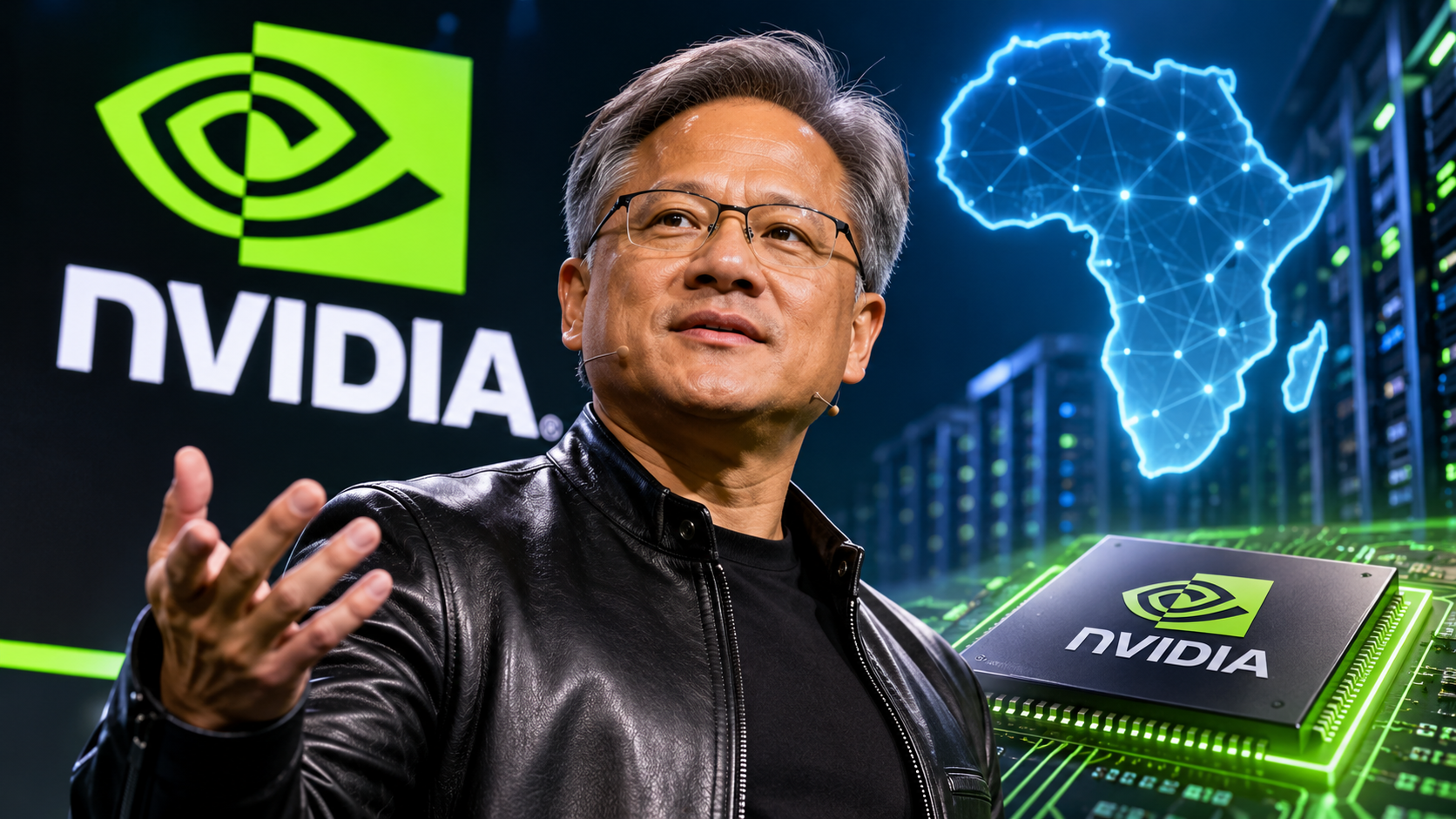
Nvidia’s $115 Billion Quarter: Can the AI Giant Thrive Beyond Jensen Huang?
Nvidia has just delivered a financial performance that would ordinarily dominate headlines across the global technology industry. The chipmaker reported quarterly revenue of $115.8 billion, representing a 103 per cent increase from the same period last year. Yet, instead of celebrating another milestone in the artificial intelligence boom, investors are also grappling with an unexpected question about the company’s future: what happens to Nvidia without Jensen Huang?
The question comes at a particularly interesting moment for the world’s leading AI chipmaker. On November 12, Nvidia announced that Huang had resigned as president and chief executive, with Chief Financial Officer Colette Kress appointed interim CEO. The departure followed controversy surrounding Huang’s personal relationships and scrutiny of connections that have raised national security and corporate governance questions.
On November 17, Huang indicated that he would be honoured to return if the board considered it in the best interests of the company, its shareholders and employees. However, Reuters reported that the board was not considering reinstating him at the time.
The developments have placed one of the world’s most valuable technology companies at the intersection of two very different stories: exceptional financial growth and uncertainty over corporate leadership.
The numbers behind Nvidia’s dominance
Nvidia’s latest financial results provide an indication of just how deeply the company is embedded in the global AI economy.
For its third quarter of fiscal 2027, which ended on October 25, the company reported revenue of $115.8 billion, up from $57 billion during the corresponding period last year. Its revenue also increased by 20 per cent compared with the previous quarter.
The data centre business accounted for $107.6 billion of this revenue, growing 110 per cent year on year. This means that approximately 93 per cent of Nvidia’s quarterly revenue came from data centre operations, reflecting the enormous demand for computing infrastructure needed to develop and operate AI systems.
The company’s profitability is equally significant. Nvidia reported GAAP net income of $65.3 billion, up 105 per cent year on year, while its gross margin stood at 74.8 per cent.
Perhaps even more revealing is the company’s outlook. Nvidia expects fourth-quarter fiscal 2027 revenue of approximately $130 billion, plus or minus 3 per cent.
These figures demonstrate that demand for AI infrastructure continues to translate into substantial commercial returns for the company.
But they also raise a bigger question about how much of Nvidia’s success is tied to its technology and ecosystem, and how much is linked to the leadership of the individual who built it.
A company that became bigger than its founder
Huang co-founded Nvidia in 1993 and spent more than three decades transforming it from a graphics processing company into a central player in accelerated computing and artificial intelligence.
Its GPUs have become essential to training and running increasingly sophisticated AI models. Through its CUDA software platform, Nvidia has also built an ecosystem that connects developers, researchers, cloud providers and businesses to its computing architecture.
This combination of hardware and software has helped establish a competitive advantage that extends beyond the performance of individual chips.
For customers, moving to alternative platforms can involve considerable technical and operational adjustments. For competitors, challenging Nvidia requires more than producing a powerful processor. It requires building an ecosystem capable of supporting the demands of modern AI development.
This is why the leadership transition matters.
Microsoft’s Outlook Outage Exposes the Hidden Cost of Digital Dependence
Nvidia’s next chapter will require continuity in product development, customer relationships, manufacturing partnerships and the strategic decisions that have helped the company maintain its position.
The board has expressed confidence in its existing leadership team and appointed Kress to oversee the business in the interim. However, the transition also puts the company’s corporate governance arrangements under greater scrutiny.
The other side of Nvidia’s financial success
Despite its latest results, Nvidia is not operating in an entirely comfortable environment.
Reuters reported on November 17 that the company’s market value had fallen by approximately $2 trillion, or 35 per cent, from its October peak. The decline reflected a combination of concerns, including the leadership controversy, questions about the sustainability of AI infrastructure spending, mounting debt across parts of the AI ecosystem and wider market pressures.
The distinction matters because Nvidia’s long-term prospects are connected to the financial health of the companies investing heavily in AI infrastructure.
Technology giants are committing enormous resources to data centres, specialised chips and computing capacity. The expectation is that these investments will eventually generate productivity improvements, new revenue streams and commercial opportunities.
However, building AI infrastructure is expensive. The industry must demonstrate that the returns from AI applications can justify the scale of capital being deployed.
For Nvidia, this creates a challenge beyond maintaining its technological lead. It must continue delivering products that customers are willing to invest in while navigating a market increasingly interested in the actual economic returns of AI.
Why Africa should be watching
The developments at Nvidia also have implications for Africa’s growing digital economy.
As African countries look to develop local AI capabilities, the availability of computing infrastructure will become increasingly important.
Data centres, cloud platforms and specialised processors are part of the foundation required to develop and deploy AI applications across sectors such as agriculture, healthcare, financial services and education.
Nvidia’s influence over the global supply of advanced computing infrastructure means that decisions made by the company can have implications for the cost, availability and accessibility of AI technology in emerging markets.
However, access to computing power is only one part of the equation.
African markets must also invest in reliable electricity, connectivity, technical skills, research capacity and locally relevant data if they are to participate meaningfully in the AI economy.
There is also an important question around whether Africa will remain primarily a consumer of AI infrastructure developed elsewhere or build the capacity to create and commercialise its own technologies.
This is where developments involving major global technology companies become particularly relevant to the continent’s digital ambitions.
The real test for Nvidia
Nvidia’s latest financial performance demonstrates that the AI economy continues to generate significant commercial opportunities. Its $115.8 billion quarterly revenue, 103 per cent annual growth and $130 billion revenue forecast underline the scale of demand for its technology.
But financial growth alone does not resolve questions about leadership, governance and long-term sustainability.
Huang’s possible return, the board’s succession decisions and the company’s ability to maintain investor confidence will all shape the next phase of its development.
The bigger test is whether Nvidia has built an institution capable of sustaining its position in an industry that is evolving rapidly and attracting increasing scrutiny.
Huang helped build the infrastructure behind much of today’s AI revolution. Nvidia’s next chapter will reveal whether the company can continue shaping that revolution while navigating a future that may look very different from the one its founder envisioned.
