


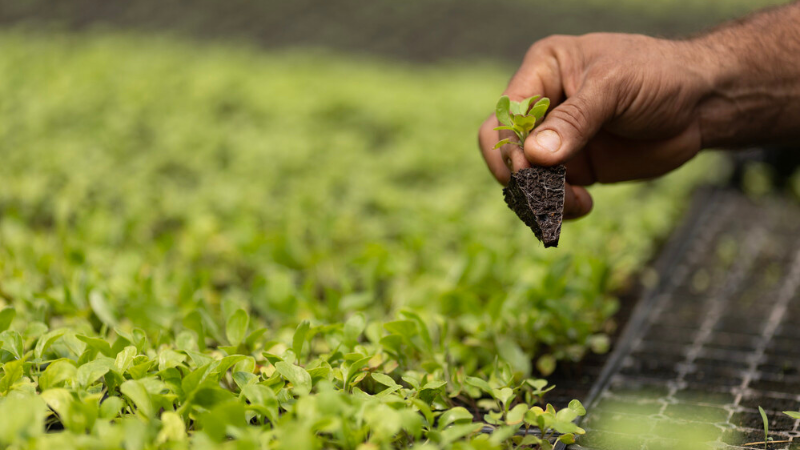
For decades, agriculture in Africa has been framed as a sector of last resort — something young people are expected to escape, not embrace. Farming has been associated with poverty, back-breaking labour, and diminishing returns, while success has been defined by urbanisation, office jobs, and digital economies. Yet, across Africa, a quiet but powerful shift is taking place. Young people are returning to the land — not out of desperation, but with purpose.
This return is not to industrial agriculture as it currently exists, but to agroecology — a system of farming rooted in ecological principles, indigenous knowledge, and social justice. What makes this shift remarkable is not just that young people are farming, but how and why they are doing it.
Africa is home to the youngest population in the world, with over 60% of its people under the age of 25. At the same time, the continent faces rising youth unemployment, climate instability, and deepening food insecurity. According to the Food and Agriculture Organization (FAO), sub-Saharan Africa loses up to 40% of its food post-harvest, while climate-related shocks increasingly disrupt production. For many young Africans, agroecology has emerged as a response to these overlapping crises — offering a pathway that combines livelihood, climate action, and autonomy.
Unlike industrial agriculture, which often relies on expensive chemical inputs and monocropping, agroecology prioritises soil regeneration, biodiversity, water conservation, and local food systems. These principles resonate deeply with young people who are increasingly climate-conscious and sceptical of extractive economic models. Agroecology allows youth to farm in ways that restore land rather than exhaust it — and to see themselves not as labourers, but as stewards and innovators.
In Kenya, youth-led agroecological initiatives are gaining momentum. Organisations such as NATURE+ Initiative, Route to Food, and community agroecology networks are training young people in composting, seed saving, permaculture design, and climate-resilient cropping. Young farmers are experimenting with indigenous crops like sorghum, millet, and legumes — crops that are more resilient to drought and better suited to local ecosystems than imported hybrids.
Across Zambia, youth groups supported by agroecology programmes have established community gardens that supply schools and local markets, improving both nutrition and income. In Senegal and Burkina Faso, young people are reviving farmer-managed natural regeneration (FMNR) techniques, restoring degraded land while increasing yields without chemical fertilisers. These are not isolated projects; they are part of a growing continental movement.
What distinguishes today’s agroecology movement from past agricultural initiatives is agency. Young people are not passive recipients of training — they are shaping knowledge, sharing practices through social media, and building networks across borders. Platforms like WhatsApp, TikTok, and YouTube have become tools for peer learning, enabling young farmers to exchange ideas on composting techniques, natural pest control, and market access. Agroecology is no longer invisible; it is becoming visible, aspirational, and communal.
Importantly, agroecology also challenges the idea that agriculture must be unprofitable. By reducing dependency on costly inputs and focusing on local markets, many young agroecological farmers report improved margins and greater financial stability. Some are building enterprises around organic produce, value-added products, seed banks, and training services. This reframes farming as entrepreneurship, not subsistence.
However, the rise of youth-led agroecology also exposes structural barriers. Access to land remains one of the greatest obstacles for young people. Financing models often favour large-scale commercial farming, while policy frameworks continue to privilege export-oriented agriculture over local food systems. Without deliberate support, agroecology risks remaining marginal — despite its proven benefits for climate resilience and food security.
Governments, donors, and development institutions must recognise agroecology as a legitimate economic and climate strategy. This means investing in youth access to land, adapting financing instruments for small-scale regenerative farming, and integrating agroecology into national agricultural and climate policies. It also means respecting and protecting indigenous knowledge systems that agroecology is built upon.
At its core, the youth agroecology movement is about more than food. It is about reclaiming dignity, restoring ecosystems, and redefining progress. In choosing agroecology, young Africans are rejecting narratives that separate modernity from tradition, technology from land, and growth from sustainability.
They are proving that resilience does not come from extraction, but from connection to soil, to community, and to future generations.
Africa’s food future will not be secured by chemicals and capital alone. It will be shaped by young people who are rooted in the land, resilient in the face of climate change, and bold enough to imagine food systems that nourish both people and planet.
